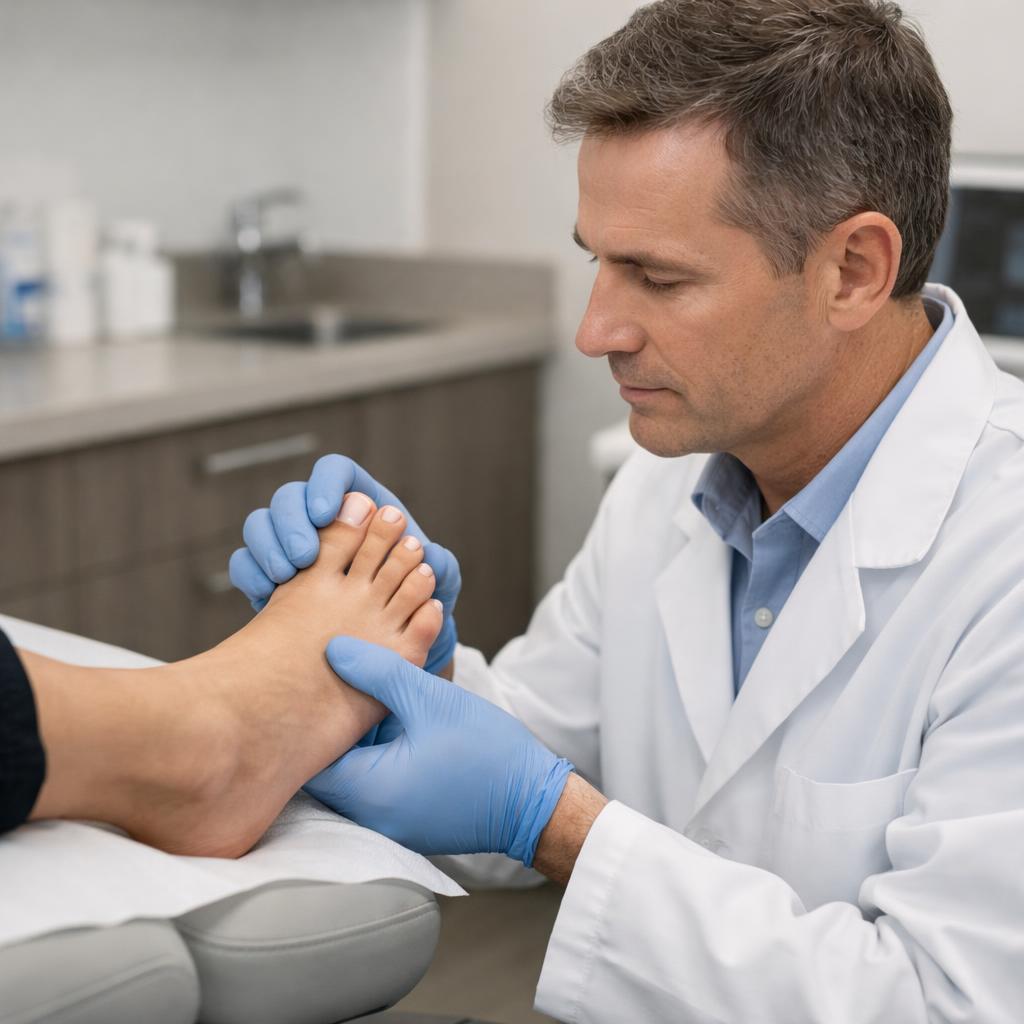
Hammertoe Treatment in Tucson, AZ
Hammertoe is a common toe deformity that can cause bent toes, shoe irritation, corns, calluses, and toe pain. In Tucson, AZ, people may notice symptoms more during walking, hiking, work shifts, or wearing snug shoes.
This educational guide explains common causes, non-surgical care options such as pads and splints, and general signs that it may be time to see a podiatrist.
What Is Hammertoe?
A hammertoe is a toe that bends abnormally at one of its joints, often causing the tip of the toe to point downward. It most often affects the second, third, or fourth toes. The toe may remain flexible at first, but over time it can become more rigid.
Related toe deformities include claw toe, where the toe may bend at multiple joints, and mallet toe, which usually affects the joint closest to the toenail.
Common Symptoms of Hammertoe
Hammertoe may cause toe pain, pressure on the top of the toe, rubbing inside shoes, corns, calluses, swelling, or difficulty finding comfortable footwear. Some people feel pain under the ball of the foot because toe position changes how pressure is distributed while walking.
Symptoms can range from mild irritation to daily discomfort.
Why Hammertoe Develops
Hammertoe can develop when muscles, tendons, or ligaments around the toe become imbalanced. Contributing factors may include shoe pressure, inherited foot structure, arthritis, past injury, bunions, nerve or muscle conditions, or long-term pressure on the toes.
High heels or narrow toe boxes may worsen irritation for some people, but footwear is usually only one part of the picture.
Non-Surgical Hammertoe Care Options
For flexible hammertoes, conservative care may help reduce pressure and irritation. Options may include wider shoes with a roomy toe box, toe pads, cushions, splints, taping, custom or prefabricated orthotics, stretching, and treatment of corns or calluses by a medical professional.
These measures do not guarantee correction of the deformity, but they may improve comfort and shoe tolerance for many patients.
Pads and Splints: What They Can and Cannot Do
Pads and splints are often used to reduce rubbing, separate toes, or support a more comfortable toe position. They may be helpful when a hammertoe is still flexible.
However, they are not right for every foot and may cause irritation if they fit poorly. People with diabetes, circulation problems, nerve symptoms, or skin wounds should be especially careful and seek medical guidance before using toe devices.
When Surgery May Be Discussed
Surgery is not the first step for every hammertoe. A podiatrist may discuss surgical options when toe pain, rigid deformity, recurring corns, shoe difficulty, or activity limits continue despite appropriate conservative care.
Procedures vary based on the toe joint, flexibility, foot structure, and overall health. Any decision about surgery should be made after an in-person evaluation and discussion of risks, benefits, and alternatives.
When to See a Podiatrist in Tucson, AZ
Consider seeing a podiatrist if toe pain persists, a toe is becoming more bent, shoes are difficult to wear, corns or calluses keep returning, walking is limited, or there are skin changes.
People with diabetes, numbness, poor circulation, wounds, redness, warmth, or drainage should seek medical attention promptly. A podiatrist can evaluate whether symptoms are related to hammertoe, claw toe, arthritis, injury, or another condition.
FAQ
Can hammertoe be corrected without surgery?
Flexible hammertoes may improve in comfort with shoe changes, pads, splints, orthotics, and stretching, but these options may not fully correct the deformity.
What is the difference between hammertoe and claw toe?
Hammertoe usually bends at the middle toe joint, while claw toe often bends at multiple joints and may curl more noticeably.
Are pads and splints safe for toe pain?
They can help reduce rubbing for some people, but poor fit can irritate skin. People with diabetes, numbness, or circulation problems should ask a clinician first.
When should I see a podiatrist for a toe deformity?
See a podiatrist if pain persists, the toe is becoming rigid, shoes are hard to wear, calluses return, or walking becomes limited.
Is hammertoe treatment in Tucson, AZ based on the severity of the toe bend?
Yes. Care options often depend on whether the toe is flexible or rigid, symptom level, footwear needs, and overall foot health.
Medical Disclaimer
This content is for general educational purposes only and is not a diagnosis or personalized medical advice. Tucson Foot and Ankle Institute in Tucson, AZ recommends an in-person evaluation with a qualified healthcare professional for concerns about hammertoe, claw toe, toe pain, or any foot condition.
Author Bio
Reviewed by Dr. Alan Shih, DPM
Sources
- Mayo Clinic
- American Academy of Orthopaedic Surgeons
- Cleveland Clinic
- MedlinePlus