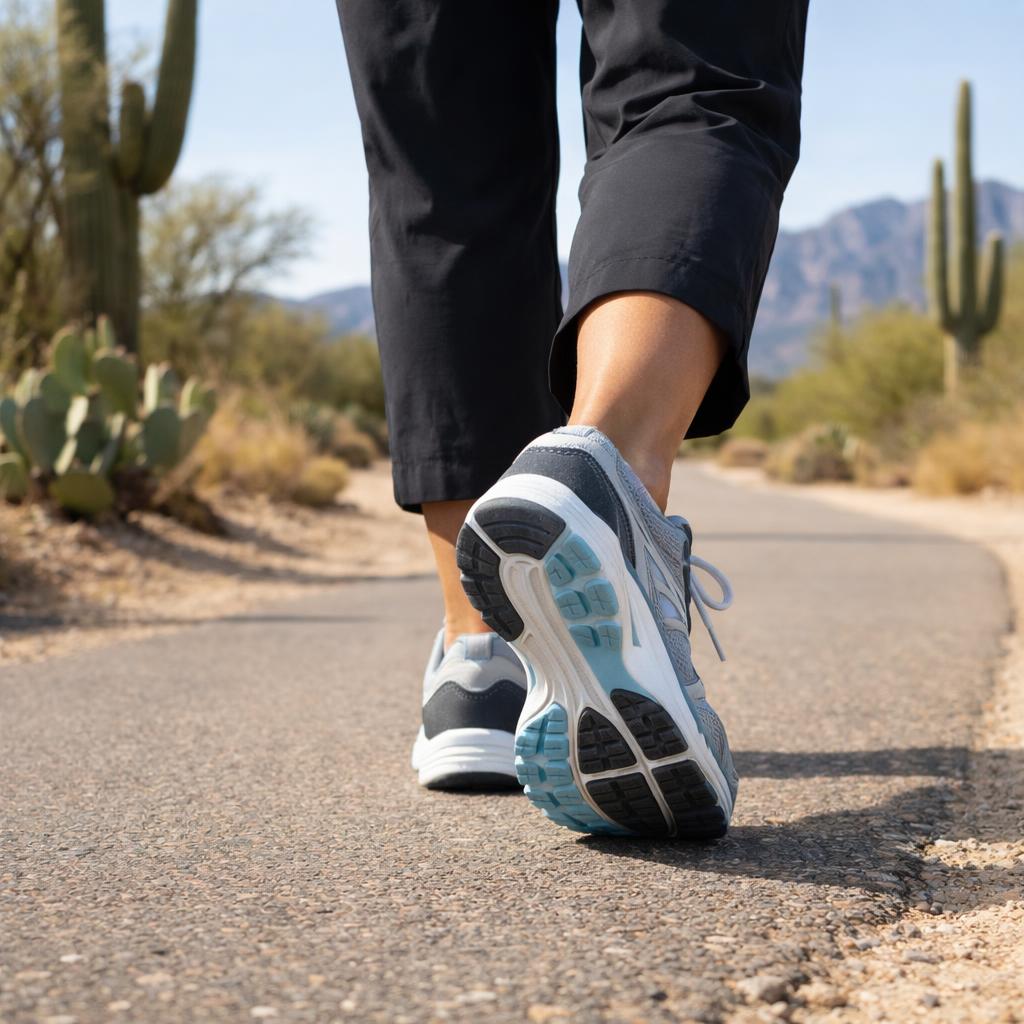
Heel Pain After Walking in Tucson, AZ
Heel pain after walking is common, especially for people who spend time on hard surfaces, exercise outdoors, or increase their activity too quickly. In Tucson, AZ, long walks, hiking, warm-weather footwear, and uneven desert terrain can all play a role in heel discomfort.
This article explains common reasons for heel pain after walking, how the plantar fascia may be involved, why supportive shoes matter, and when it may be appropriate to see a podiatrist.
Why Heel Pain Can Happen After Walking
Heel pain after walking often develops when the tissues that support the foot are stressed more than usual. This may involve the plantar fascia, which is a strong band of tissue along the bottom of the foot, or the fat pad, tendons, joints, and surrounding soft tissues.
Pain may feel sharp, sore, tight, or bruised depending on the structures involved. Because several conditions can feel similar, persistent symptoms should be evaluated by a qualified clinician.
Common Causes of Heel Discomfort
Several issues may contribute to heel discomfort after walking, including:
- Plantar fascia irritation
- Achilles tendon strain
- Heel fat pad irritation
- Poorly cushioned or unsupportive shoes
- Sudden increases in walking distance
- Prolonged standing on hard surfaces
- Walking on uneven or rocky terrain
Some people notice symptoms more after walking on concrete, trails, or uneven surfaces around Tucson, AZ.
The Role of the Plantar Fascia
The plantar fascia helps support the arch and absorbs stress during walking. When it becomes irritated, the heel may hurt during the first steps in the morning or after sitting, and symptoms may return after longer walks.
Plantar fascia irritation is one of the more common reasons people seek podiatry care for walking pain. A podiatrist can evaluate whether the plantar fascia, tendon structures, footwear, or another factor may be contributing.
Footwear and Supportive Shoes
Shoes can make a major difference in how force moves through the heel. Worn-out soles, thin sandals, unsupportive flats, or shoes without adequate arch support may increase stress on the heel.
Supportive shoes often include:
- Cushioning under the heel
- A stable heel counter
- Proper length and width
- Arch support appropriate for the foot type
- A sole that does not twist excessively
Supportive shoes may help reduce strain during everyday walking, though footwear needs vary by person.
Tucson Walking, Hiking, and Terrain Factors
Tucson, AZ offers many opportunities for walking and hiking, but desert terrain can challenge the feet. Rocky paths, sloped trails, and long distances in warm weather can increase fatigue and pressure on the heel.
Gradual activity progression, appropriate shoes, hydration, and rest periods can help reduce overload. If heel discomfort continues despite these general measures, a podiatry evaluation may be helpful.
When to See a Podiatrist
Consider seeing a podiatrist if heel pain:
- Lasts more than a couple of weeks
- Keeps returning after walks
- Limits normal walking or exercise
- Worsens over time
- Occurs with swelling, numbness, tingling, redness, or difficulty bearing weight
A podiatrist can evaluate the foot and ankle, review footwear and activity patterns, and discuss evidence-based care options. This guidance is general and is not a diagnosis.
How Podiatrists Evaluate Heel Pain
A podiatry evaluation may include a discussion of symptoms, walking habits, footwear, medical history, and a physical exam of the foot and ankle. In some cases, imaging may be considered to assess bone, soft tissue, or alignment concerns.
The goal is to understand likely contributors and guide appropriate next steps based on the individual evaluation.
FAQ
Why does my heel hurt after walking?
Heel pain after walking can come from irritated soft tissue, plantar fascia strain, tendon stress, footwear issues, or increased activity. A podiatrist can help identify possible causes.
Is plantar fascia irritation common with walking pain?
Yes. The plantar fascia supports the arch and can become irritated with repeated stress, especially after long walks, standing, or sudden activity changes.
Can supportive shoes help heel discomfort?
Supportive shoes may reduce stress on the heel for some people. Look for cushioning, stable support, and a comfortable fit, but individual needs can vary.
When should I see a podiatrist for heel pain?
Seek podiatry care if pain persists, worsens, limits walking, keeps returning, or occurs with swelling, numbness, redness, or trouble bearing weight.
Can Tucson terrain contribute to heel pain?
Yes. Hard surfaces, uneven trails, rocky paths, and longer outdoor walks in Tucson, AZ may increase heel stress, especially without proper footwear or gradual conditioning.
Medical Disclaimer
This content is for educational purposes only and does not provide a diagnosis or personalized treatment advice. Tucson Foot and Ankle Institute in Tucson, AZ recommends consulting a qualified healthcare professional or podiatrist for concerns about heel pain, walking pain, or foot and ankle symptoms.
Author Bio
Reviewed by Dr. Alan Shih, DPM
Sources
- American Podiatric Medical Association
- Mayo Clinic
- Cleveland Clinic
- American Academy of Orthopaedic Surgeons