Diagnostic Testing for Foot Pain in Tucson, AZ
Foot pain can interfere with walking, exercise, and daily life. Identifying the cause is the first step toward appropriate care.
At Tucson Foot and Ankle Institute in Tucson, AZ, diagnostic testing helps evaluate bones, joints, nerves, tendons, and soft tissues so patients better understand what may be contributing to their symptoms.
Why Diagnostic Testing Matters
Foot pain may result from overuse, injury, nerve conditions, arthritis, structural problems, or medical conditions such as diabetes. Because many issues share similar symptoms, a thorough evaluation is important. Diagnostic testing provides objective information that supports clinical findings from your foot exam.
Comprehensive Foot Exam
A detailed foot exam is often the first step in diagnostic testing for foot pain in Tucson, AZ. This includes reviewing medical history, discussing symptoms, and evaluating foot structure, alignment, circulation, skin health, and range of motion. Gait analysis may also be performed to observe how you walk and distribute weight.
Imaging Studies
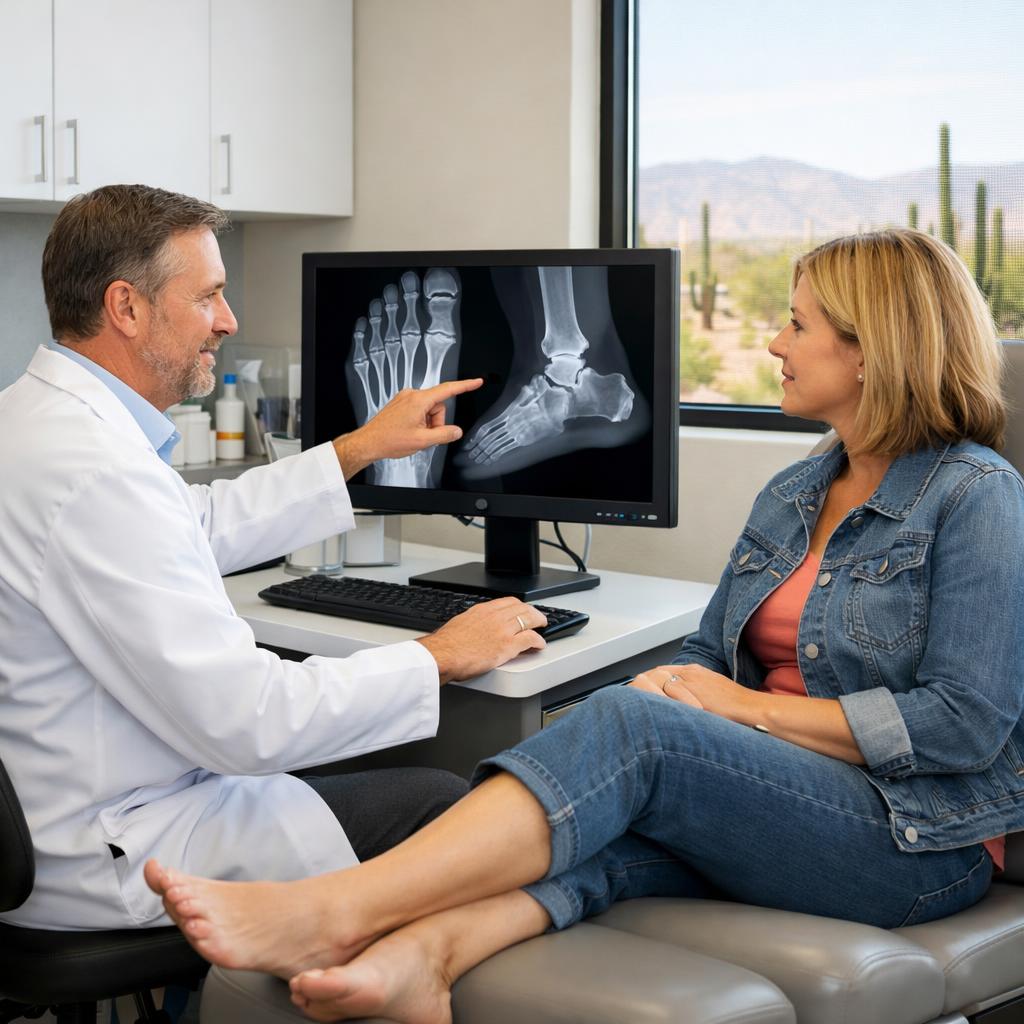
Imaging helps visualize internal structures of the foot and ankle. X-rays are commonly used to assess fractures, bone alignment, arthritis, and deformities. In some cases, advanced imaging such as MRI or ultrasound may be recommended to evaluate soft tissues like tendons, ligaments, and plantar fascia. Imaging decisions depend on symptoms and clinical findings.
Nerve Testing
If numbness, tingling, burning, or shooting pain is present, nerve testing may be considered. Studies such as nerve conduction testing can help assess how well electrical signals travel through the nerves. This can support evaluation of conditions like peripheral neuropathy or nerve entrapment.
Diagnostic Testing for Chronic or Complex Pain
When foot pain is persistent or does not improve with initial care, additional testing may be helpful. Laboratory tests may be considered in specific situations, such as when inflammatory or systemic conditions are suspected. The goal is to better understand contributing factors and guide next steps.
When to See a Podiatrist in Tucson, AZ
Consider scheduling an evaluation if foot pain lasts more than a few days, worsens, limits daily activities, or is associated with swelling, redness, numbness, or a wound that does not heal. Individuals with diabetes or circulation concerns should seek prompt evaluation for any new foot symptoms.
What to Expect at Tucson Foot and Ankle Institute
At Tucson Foot and Ankle Institute, diagnostic testing is tailored to each patient’s symptoms and medical history. The focus is on careful evaluation, patient education, and clear explanations of findings so individuals can make informed decisions about their foot health.
FAQs
What is included in a diagnostic foot exam?
A diagnostic foot exam typically includes a medical history review, physical examination, gait assessment, and evaluation of circulation, sensation, and joint movement.
Do all cases of foot pain require imaging?
Not always. Imaging is recommended based on symptoms and exam findings. Some cases can be evaluated without advanced imaging.
What is nerve testing used for in foot pain?
Nerve testing helps evaluate symptoms such as numbness, tingling, or burning sensations and can support assessment of nerve-related conditions.
How long does diagnostic testing take?
A standard office visit with exam and basic imaging can often be completed in one appointment. Additional tests may require separate scheduling.
When should I seek medical attention for foot pain?
Seek evaluation if pain is severe, persistent, associated with swelling or numbness, or if you have diabetes and notice any new foot changes.
Medical Disclaimer: This content is for educational purposes only and does not constitute medical advice. For personalized evaluation and diagnostic testing, please contact Tucson Foot and Ankle Institute in Tucson, AZ.
Author Bio
Reviewed by Dr. Alan Shih, DPM
Sources
Mayo Clinic
National Institutes of Health (NIH)
American Academy of Orthopaedic Surgeons (AAOS)
American Podiatric Medical Association (APMA)